
How Traffic Warrants Work in Charles City County
Charles City traffic and misdemeanor cases route through General District Court. Virginia Code §46.2-938 addresses failure to comply with certain traffic summonses or notices; it can allow a warrant and DMV notification under the statute’s conditions. It does not make every unpaid ticket an automatic warrant.
Read the charge type and the court entry together. A civil traffic infraction, a traffic misdemeanor, a missed hearing, and a payment-plan default can lead to different steps. The General District clerk holds the docket, and the Sheriff’s Office executes process issued by the court.
Section 46.2-938 concerns specified failures to comply with a summons or notice and permits court action that can include an arrest warrant and notice to DMV under its conditions. Check whether the paper is a summons, a court notice, or a prepayable ticket, and whether the listed charge is criminal. The statute is not a rule that every balance due creates a warrant.
Charles City Traffic Warrants Start in General District Court
The local court publishes traffic and criminal docket blocks on the first and third Wednesday. The schedule is a routing aid, not a promise that a walk-in appearance or warrant recall will be accepted. Call the clerk to confirm the current docket and the process for the specific case.
Virginia’s traffic-summons statute explains the noncompliance route. The county source set does not show a separate municipal traffic court, online warrant portal, or local traffic-warrant roster.
The statute image below is a legal reference for summons noncompliance, not a record of any Charles City case.
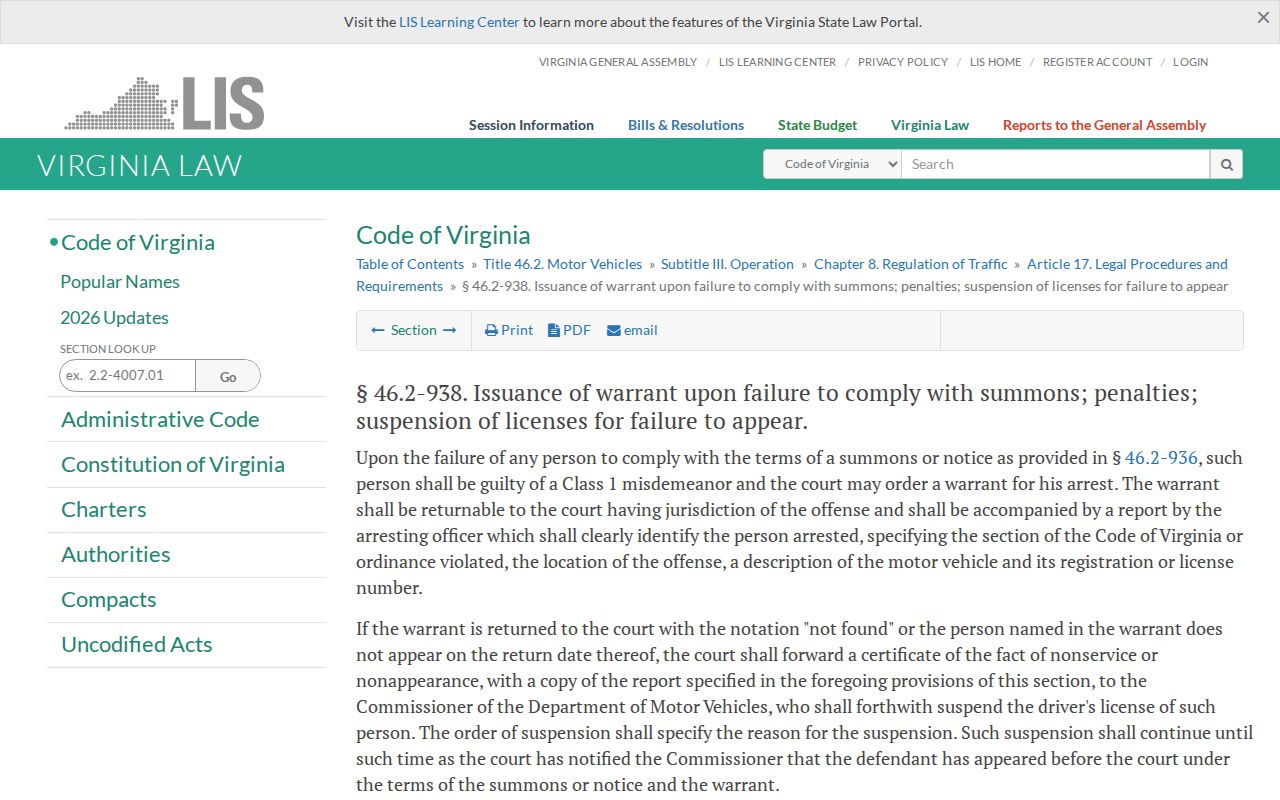
Use the local clerk to connect the statute to the court docket and any process actually entered.
Charles City County Traffic Warrant Checks
Search the official Virginia court systems for the Charles City General District case, then contact the clerk if the question is whether a warrant or other process is current. The GDC search can use a party name, case number, or hearing date after the specific court is selected. The payment site is separate and does not confirm warrant status.
- Open Virginia OCIS or the General District case system and select Charles City.
- Search by the name, case number, or hearing date shown on the citation or notice.
- Compare the case type, hearing entry, and court before drawing a conclusion.
- Call the Combined District Court clerk about process, payment routing, or the next hearing.
- Ask the Sheriff’s Office only for execution routing; consider counsel before appearing in person.
A Traffic Infraction FTA Has a Narrow Warrant Rule
Virginia Code §19.2-258.1 allows a court to hear a traffic infraction in the person’s absence, but it does not allow a warrant under §46.2-938 solely because someone missed an infraction hearing. Traffic misdemeanors and criminal traffic charges are different. The ticket’s classification matters.
Read the traffic-infraction limitation with the case record. Ask the clerk which kind of case appears before treating a missed date as a warrant event.
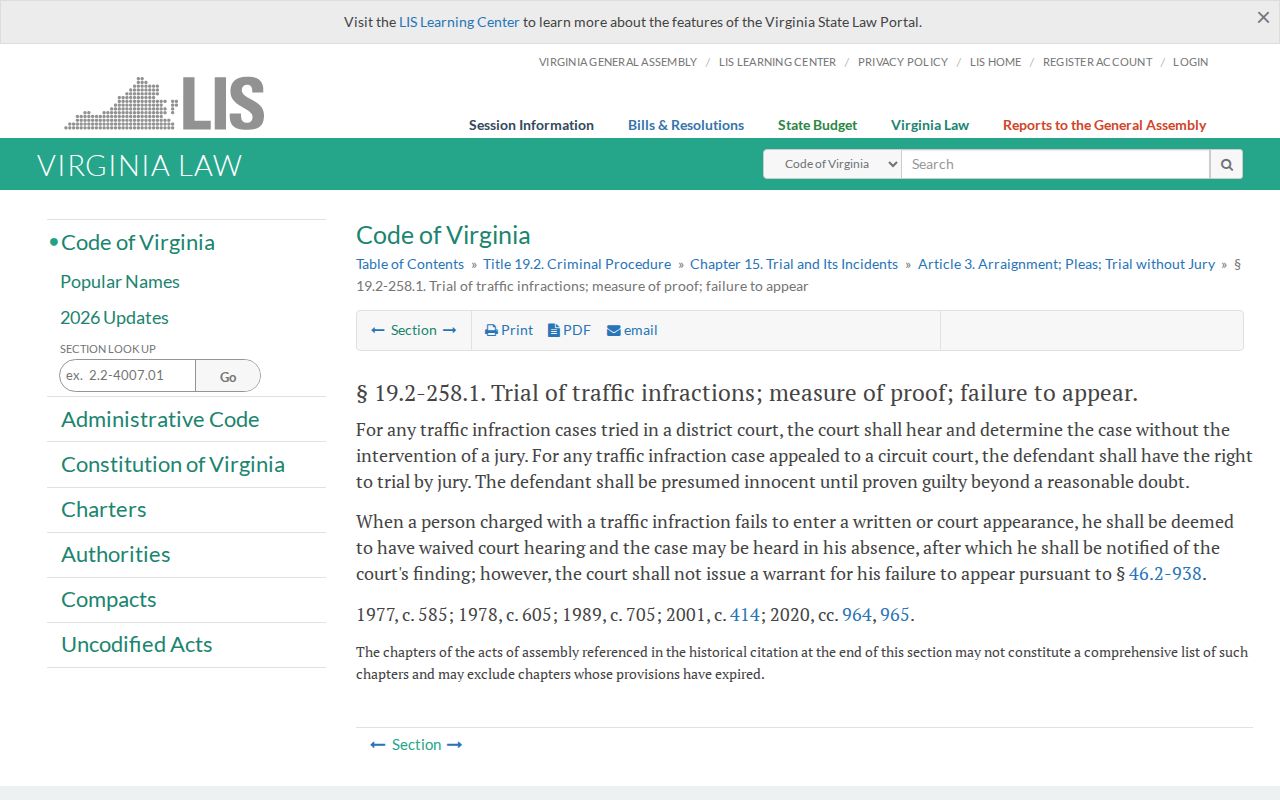
This limit concerns a civil infraction and should not be applied to every traffic misdemeanor.
Traffic Warrants: What They Show
No local public traffic-warrant sample was found. The court search may show a case number, charge, offense date, hearing, and service information when entered. A citation or ticket number can help the clerk find the file, but it is not a warrant number format published for Charles City County.
| Case or citation number | Helps the clerk locate the traffic file; no local warrant-number pattern was published. |
|---|---|
| Charge type | Distinguishes an infraction from a misdemeanor or other offense. |
| Court | Identifies Charles City General District Court for a local traffic case. |
| Hearing date | Shows a scheduled setting when available. |
| Payment or process | Payment, service, and warrant status can update separately. |
Charles City Ticket Payment Does Not Recall a Warrant
The Virginia payment interface handles eligible tickets and fines, not live warrant confirmation. Its instructions say OCIS cannot accept payment and direct users to the local court when a case or payment needs confirmation. A card payment has a 4% convenience fee, and a receipt can cover up to five cases.
Charles City’s General District payment policy permits a request for an agreement when a person cannot pay within 90 days. Initial deferral can run up to 180 days for balances of $350 or less, or up to one year for balances from $350.01. Those are fine-and-cost terms, not bond amounts or an automatic recall order.
Use the official Virginia ticket-payment page for eligible cases.
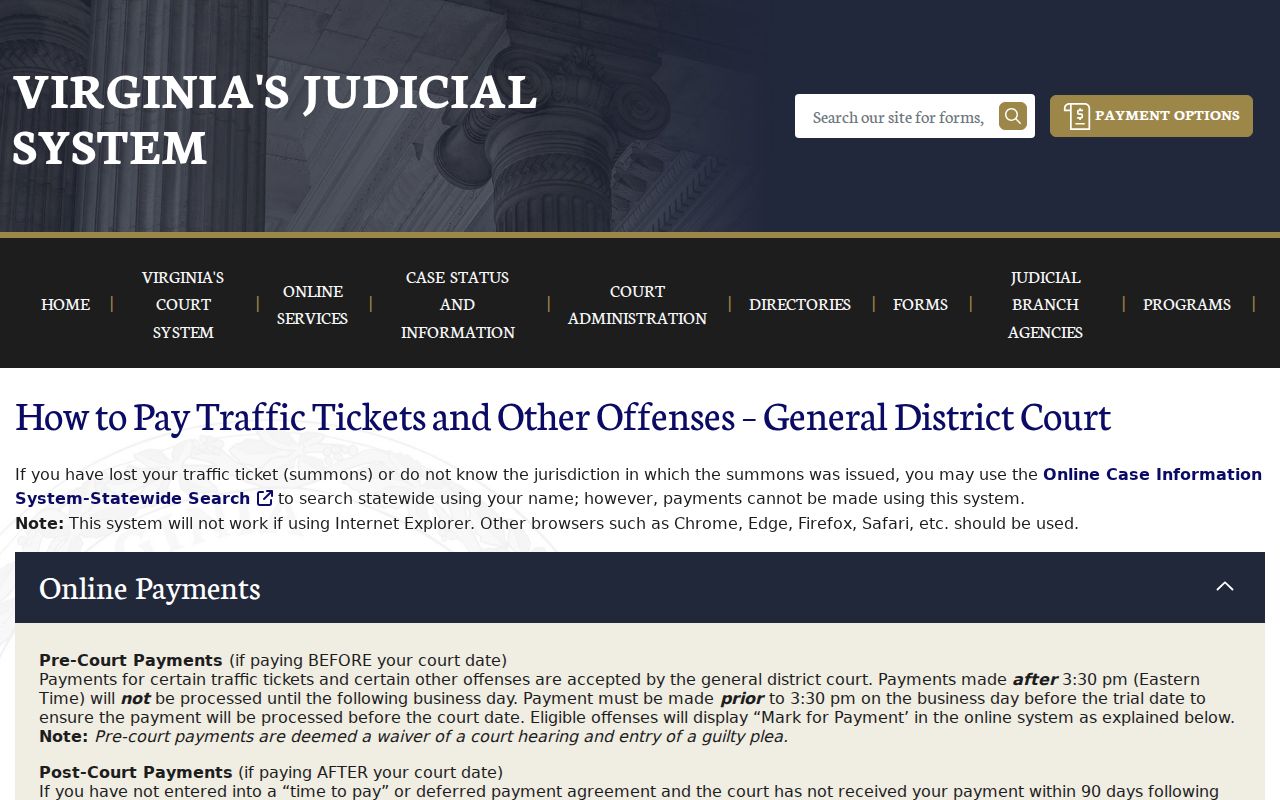
After payment, ask the clerk whether the docket and any related process were updated.
Clearing a Charles City County Traffic Warrant
Before paying, confirm that the citation belongs to Charles City General District Court and ask whether the charge is eligible for online prepayment. A fine payment does not necessarily resolve an arrest warrant, capias, DMV notice, or pending hearing. The court must explain what action will change each part of the record.
- Ask the clerk which court and case type appear on the citation.
- Use the official payment route only if the case is eligible and the court directs it.
- For a missed date or active process, ask about the required appearance or motion.
- Confirm separately whether the docket, warrant process, and any DMV notice changed.
Warning: Do not assume an online receipt clears court process or a DMV notice; ask the clerk what has been updated and what remains open.
For an infraction that may be prepaid, the payment interface and the court docket are separate steps. A transaction receipt shows that a payment was submitted; it does not show that a pending hearing, a warrant entry, or a DMV notice was withdrawn. Keep the receipt number and ask the clerk whether any separate court action remains.
Charles City Ticket Entry Can Take Several Days
Virginia’s self-help instructions say a ticket may take up to ten business days to enter and another two business days to appear in the online system. If it is not visible, keep the citation and contact the court rather than assuming the ticket was dismissed or that no process exists.
The official guidance also explains which prepayable offenses can be paid before court. Eligibility depends on the ticket, and the court remains the place to ask about a missed date or warrant status.
See the Virginia ticket instructions before relying on an online payment option.
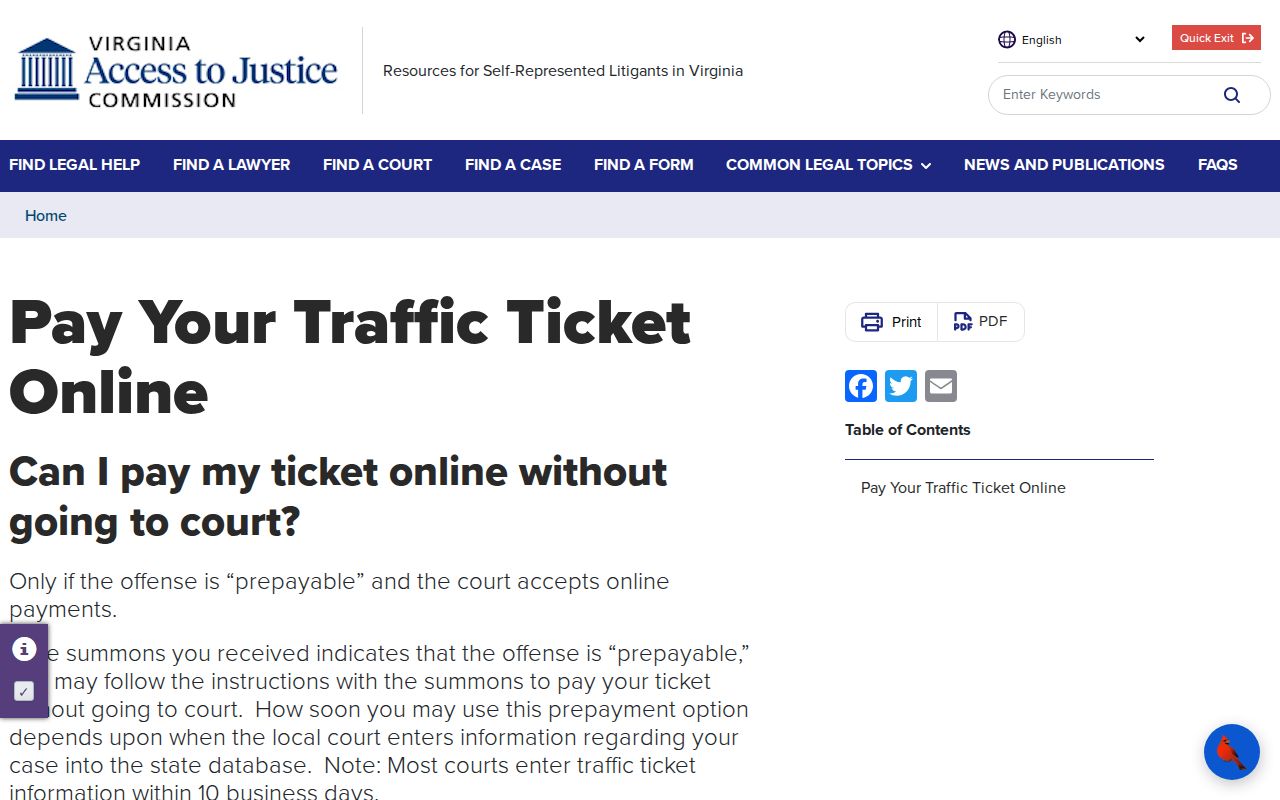
Contact the local clerk if the court date is near or the case remains absent after the stated entry period.
Failure to Appear Depends on the Case and Bail
Virginia Code §19.2-128 addresses failure to appear after a person has been admitted to bail. That criminal procedure is distinct from the rule for a missed civil traffic-infraction date under §19.2-258.1 and the summons process in §46.2-938. A missed appearance does not by itself tell a reader which statute applies, whether process issued, or whether a DMV notice followed.
Use the citation and court docket to identify the case classification, then ask the Combined District Court clerk what the record shows. The General District Court clerk can explain the local file and next appearance, but only the court can resolve its process.
Review Virginia Code §19.2-128 alongside the specific case rather than treating every missed traffic date as the same event.
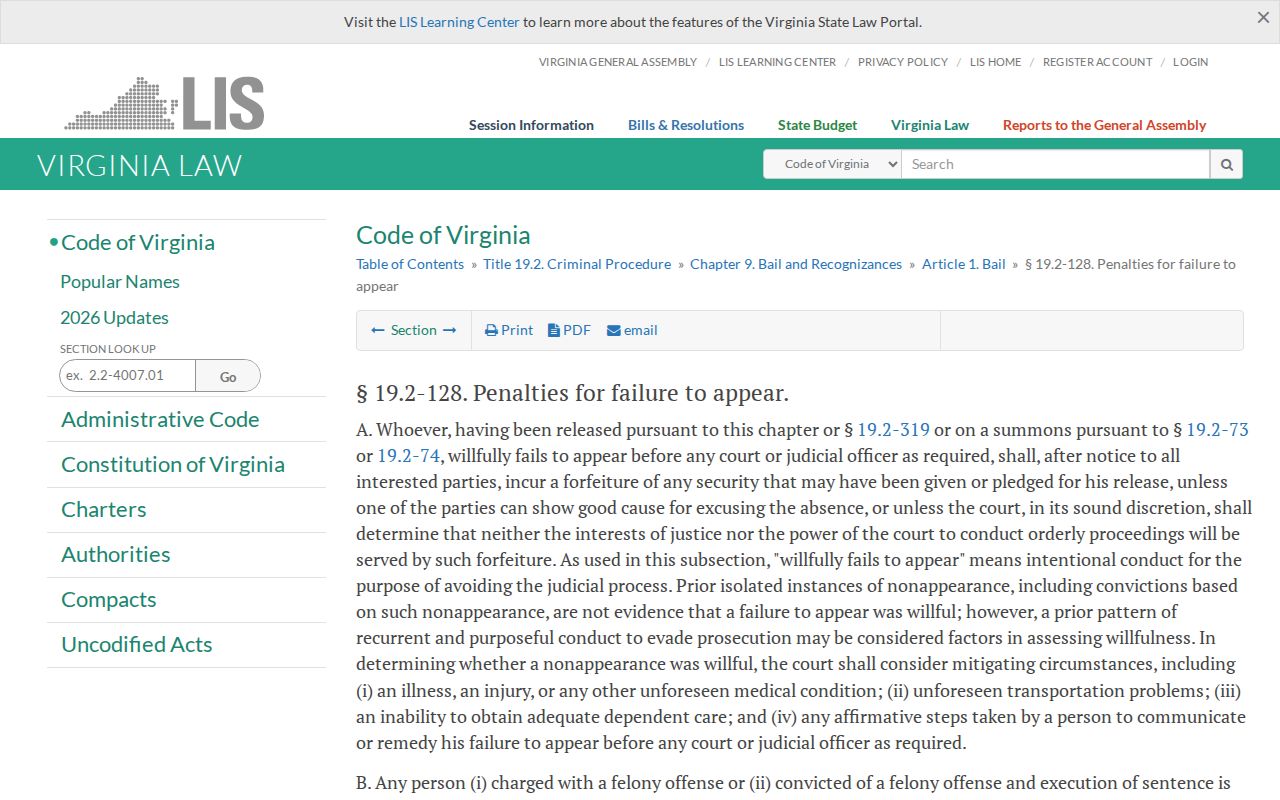
The statute supplies legal context, not confirmation of an active Charles City County warrant.
How Traffic Warrants Trigger License Holds
Section 46.2-938 addresses a court warrant and DMV notification in specified traffic-summons circumstances. A license suspension can remain in place until the person appears and satisfies the warrant. The infraction limitation in §19.2-258.1 matters because a missed civil-infraction date alone does not trigger that warrant under §46.2-938.
| Mechanism | What Triggers It | What It Does |
|---|---|---|
| Court warrant | Specified noncompliance under §46.2-938 | Authorizes arrest process on the court matter |
| FTA event | Missed required court setting | May lead to another court action depending on the case type |
| DMV notice or suspension | Statutory notice from the court | Separate license action; ask the court and DMV about its status |