
How Arrest Warrants Work in Charles City County
Virginia Code §19.2-72 sets the core rule for every arrest warrant. The process begins with a complaint sworn under oath or affirmation. A judicial officer then weighs whether those facts add up to probable cause. If they do, the warrant that follows names the accused, spells out the offense, and directs an officer to make the arrest and bring the person before the proper court. In Charles City County, the magistrate office is usually the first judicial contact for a new complaint, a probable-cause question, or a bail matter. From there, a traffic or misdemeanor file tends to route through General District Court, while felony trial issues may land in Circuit Court.
Charles City Arrest Warrants Start With a Sworn Complaint
Magistrates sit outside law enforcement entirely. In Charles City County, this independent judicial officer reviews criminal complaints, issues warrants or summonses when the law allows, and holds bail hearings. The Region 6 directory shows a local office, and statewide magistrate service runs around the clock through in-person or video contact, including after hours. That round-the-clock reach does not mean every counter handles every record question. Routing questions for Charles City County go to the magistrate office at 804-652-2478, where staff can say whether an in-person or video route applies to a new complaint or a bail matter. An existing court file is a different matter; that belongs to the clerk. For the formal issuance steps, read the Virginia arrest-warrant issuance statute.
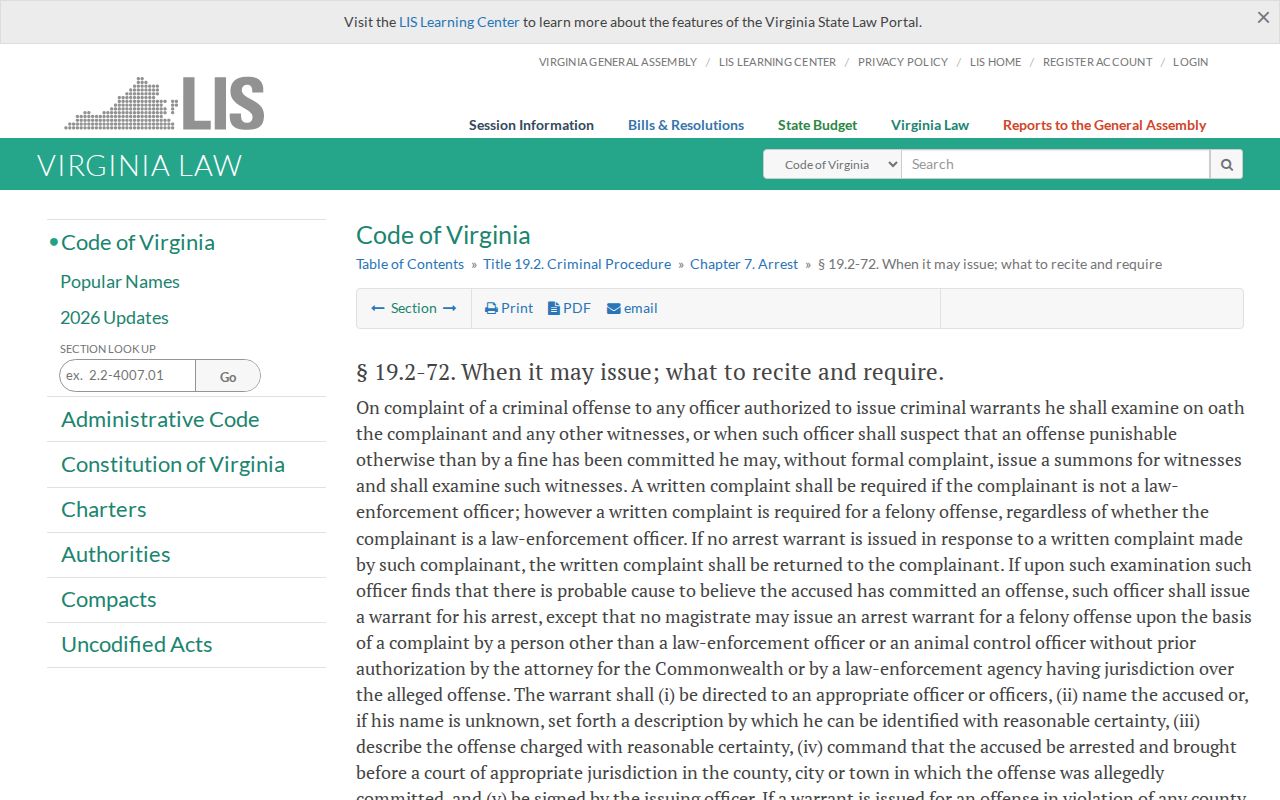
Charles City County readers can use that statute to understand issuance, then bring any specific file to the local magistrate or court.
A Charles City Warrant Moves Through Several Offices
Three offices touch one warrant in Charles City County, and each plays a distinct part. The magistrate issues the process. The clerk keeps the court file. The Sheriff's Office executes the papers. A public docket can list a case while saying nothing about when an officer actually received, served, or returned the warrant, so a docket entry and an execution inquiry often move at different speeds. For traffic and misdemeanor matters, call the Combined District Courts clerk at 804-652-2188, reachable from 8:00 a.m. to 4:00 p.m. Circuit felony records run through the Circuit criminal division at 804-652-2107, during the Circuit Clerk's 8:30 a.m. to 4:30 p.m. office hours. Both clerks work out of the Courthouse Road complex, yet each answers only for the files assigned to its own division. The Sheriff's Office takes questions about execution, but deciding whether a court should recall its process belongs to the court alone.
Arrest Warrants: What They Contain
Virginia's DC-312 and DC-314 form manuals lay out the fields used on felony and misdemeanor arrest warrants. Think of them as a data schema. They are not a Charles City public roster of active warrants. The categories can help a reader spot the court and process dates inside an available record, though a blank field may just reflect an update lag or an access limit rather than a missing fact.
| Issuing court | Names the jurisdiction or court connected to the process. |
|---|---|
| Offense and code | Identifies the listed charge and Virginia code references. |
| Issue date and officer | Records issuance time and the judicial officer’s title or signature. |
| Case number | Connects the warrant to the court file. |
| Execution or service | May record date, time, officer, agency, and return details when entered. |
| Hearing | Can identify the court appearance set after process issues. |
Read each field as an event, not a guarantee. An issue date does not prove service happened. An execution date, standing alone, does not show whether a later court recalled the process, and a missing return can stem from timing or access limits rather than anything else. If an adult OCIS docket is available, take its case number to the clerk and ask which parts of the warrant record are open to the public in Charles City County.
Execution and Return Are Separate Charles City Warrant Events
Execution and return are two separate events in Virginia, governed by Code §19.2-76 for warrants, capiases, and summonses. A valid process document exists on its own; the officer's return is a later, distinct record entry. That gap explains why a Charles City County court docket and an execution inquiry rarely update at the same moment. Warrantless arrests follow their own track. Under §§19.2-81 and 19.2-82, an officer has arrest authority and must present the person promptly to a magistrate or issuing authority, and a warrant or summons can follow afterward even though no public warrant-list entry preceded the arrest. The execution-and-return statute spells out the officer's process role.
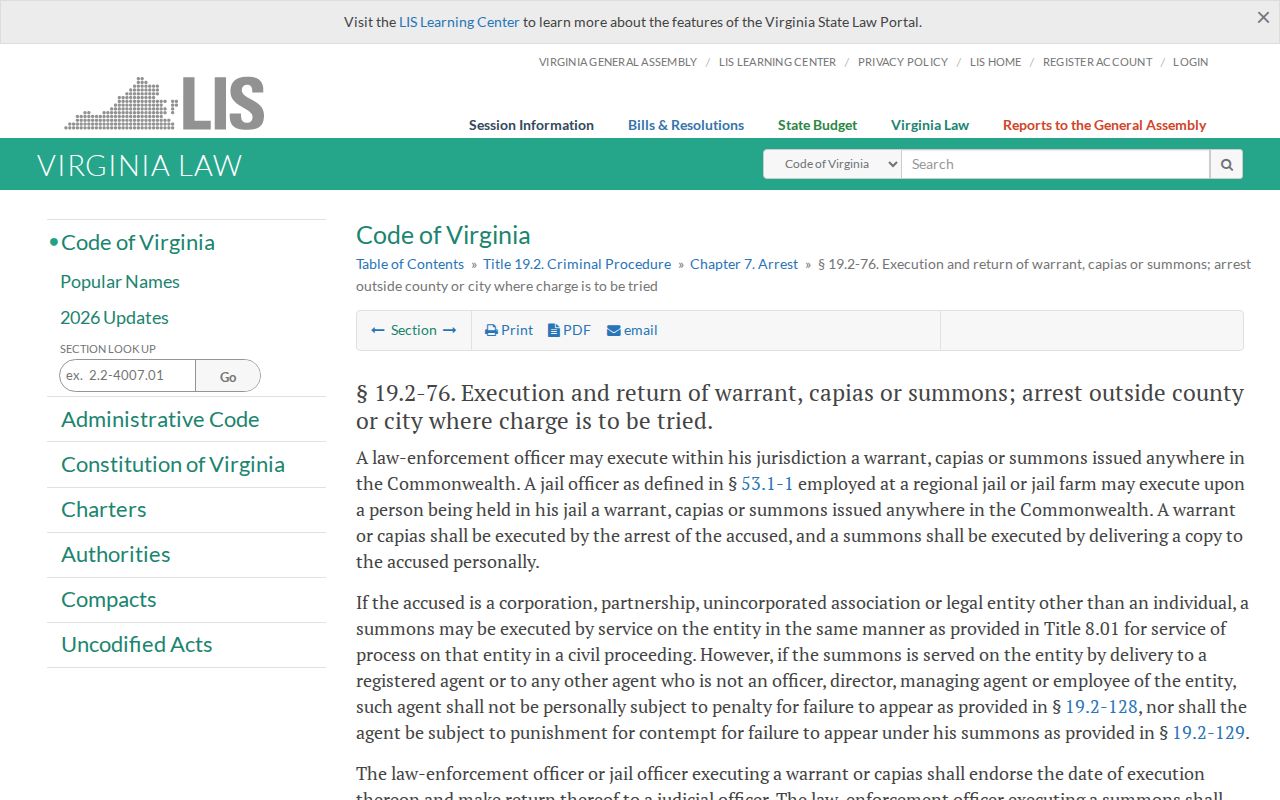
For current status in Charles City County, set the case entry beside what the issuing clerk or the Sheriff's Office can confirm directly.
How Warrants Get Served in Charles City County
Serving papers in Charles City County falls to the Sheriff's Office, which acts as the executive officer of the courts and executes both state and county process. No separate warrant-unit phone line or published service schedule exists. There is no jail booking address posted, and no standard surrender procedure either. So do not assume a clerk's counter will take a surrender or accept a bond payment. Someone with a possible warrant should talk to a lawyer and the issuing office first, since the county publishes no single walk-in route that covers every case.
After execution, Virginia procedure requires the return and court processing. The issuing court sets hearings and rules on recall; the sheriff handles execution. The Sheriff's Office main contact is 804-829-9265 at 10780 Courthouse Road, with weekday hours from 8:00 a.m. to 4:30 p.m. Treat that as a general line. It is not a dedicated warrant number, and staff may not discuss every case over the phone.
Juvenile Arrest Records Have Separate Access Limits
Juvenile cases play by different rules in Charles City County. Virginia Code §16.1-301 locks down access to juvenile law-enforcement records, and J&DR files can carry added confidentiality protections on top of that. So a name that comes up empty in OCIS proves little. That is especially true when juvenile, domestic, sealed, or expunged material sits behind the silence. A parent, a party, or an attorney with a right to the information has a real route, though. The Combined District Courts clerk can explain the proper request and what proof of identity or relationship it takes. A general public inquiry should not expect private juvenile details, and no one should assume a standard adult record will be released here.
Arrest Warrants, Summonses, and Bench Warrants
An arrest warrant rests on probable cause and commands an arrest. A summons works differently. It just tells a Charles City County resident to show up in court. A bench warrant, sometimes called a capias, usually comes later, after a missed appearance or a show-cause hearing. Virginia paperwork mixes these terms, so read the issuing court and the order itself side by side before acting on any of them.
| Feature | Arrest Warrant | Summons | Bench Warrant |
|---|---|---|---|
| Purpose | Authorizes an arrest on a charge | Calls for a court appearance | Addresses a missed obligation or court order |
| Basis | Probable cause after a complaint | Process allowed in the circumstances | Case-specific failure to appear or comply |
| Record route | Magistrate, issuing court, clerk | Issuing court or clerk | Clerk for the court with the underlying case |
| Next step | Confirm process and ask about counsel and bail | Follow the date and instructions on the summons | Ask the court about recall or a new hearing |
Charles City Felony Warrant Records Have a Circuit Route
Felony cases in Charles City County travel a two-step route. The General District Court hears traffic matters, misdemeanors, and felony preliminary hearings, while the Circuit Court takes the felony trials themselves. So one Charles City County arrest warrant can touch two dockets: an early preliminary case in district court, then a separate Circuit file if the charge moves forward. The Circuit Clerk holds those circuit-level records. Call the Circuit Court's criminal division when your question concerns that side of the case. For a district docket, use the combined clerk instead, and the county court page explains how the local courts divide this work. The Charles City Circuit Court page posts the official clerk and court information you need.
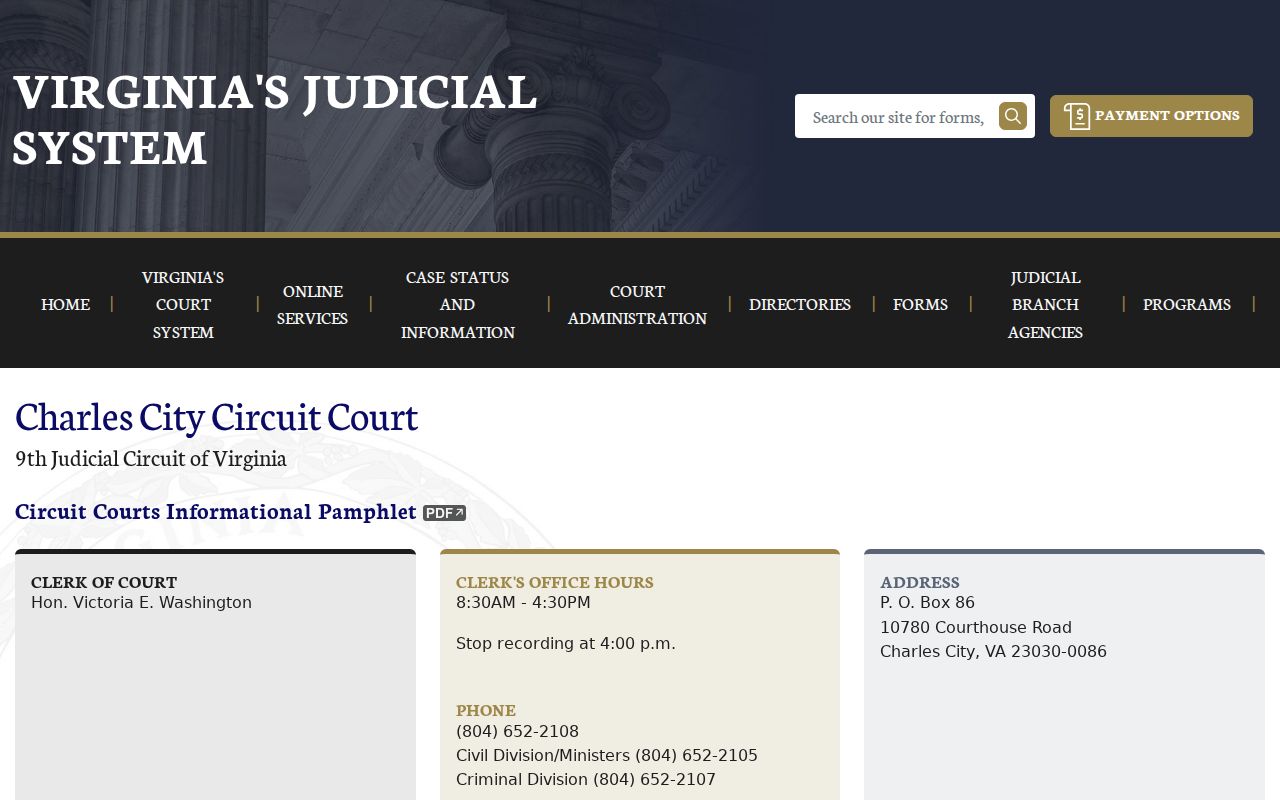
A Circuit docket and a General District preliminary case in Charles City County link together only when the case history ties them.
Handling an Arrest Warrant in Your Name
Start with OCIS to find adult case information, then phone the clerk of the likely issuing court. A magistrate is the better contact if a new complaint, a probable-cause review, or bail is at issue. The Sheriff's Office handles service and execution routing. Charles City County publishes no public arrest-warrant roster, no bond table, and no walk-in surrender process. Ask the clerk directly whether you need counsel, a motion, a court appearance, or a set date. Virginia offers no countywide promise that paying online or appearing at one counter will clear a warrant, so confirm any recall with the court that issued it.
Important: Speak with a Virginia lawyer before appearing in person; the county does not publish one surrender or bond procedure that applies to every case.